

Have you ever wondered what you would do if the pilot became unconscious? If there is no one else capable of flying the plane, your safety may depend on you making several important decisions. Your landing will likely be guided by someone on the radio, but this overview will help you know what to expect.
Step 1
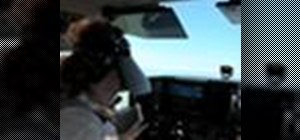
Take a seat. The pilot-in-command (Captain) usually sits in the left seat where the concentration of instruments are (especially for light single engine aircraft). Fasten your seatbelt and shoulder harness if so equipped. However, almost all aircraft have dual controls and you can successfully land the plane from either side. Do not touch the controls yet! Many airplanes have an autopilot and moving the control yoke or stick may disengage it. Make sure the unconscious pilot is not leaning on the control yoke (the plane's equivalent of a steering wheel).
Step 2
Take a breather. You'll probably be overwhelmed with the sensory overload and the seriousness of the situation.
Step 3
Level the aircraft. If the plane is noticeably ascending, descending, or turning, gently bring the plane into a level flight attitude.
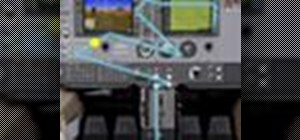
Look for the attitude indicator. Sometimes called the artificial horizon, it consists of a miniature set of "wings" and a picture of the horizon. The top is blue (for the sky) and the bottom is brown. On some complex aircraft, the attitude indicator is displayed on a computer screen in front of the pilot. For older aircraft, it is in the center of the top row of instruments. - Correct the pitch (climb or descent) and bank (turning) if necessary so that the miniature wings are level with the artificial horizon. If they are already level, do not touch the controls at all; move to the next step. If you do need to level the plane, however, adjust the flight attitude by pulling the yoke (or stick) toward you to bring the nose up or push it forward to lower the nose. You can correct bank (turning) by rotating the yoke left or right to turn in that direction. Simultaneously, you must apply slight back pressure to the yoke to prevent the airplane from losing altitude.
- If you have been trying to correct the flight path, the autopilot is probably disengaged. Try to get the autopilot on, by pushing buttons labeled "AUTOPILOT" of "AUTO FLIGHT" or "AFS" or "AP" or something alike. On passenger airplanes it is situated in the center of the glareshield panel, in a position where both pilots can easily reach it. Only if this results in the aircraft doing things you do not want it to do, disengage it again by pusning all buttons you can find on the yoke (which then probably will include the autopilot disconnect button). Usually the best way to get an aircraft to fly in a stabilized way is to not touch the controls; it is designed to be stable and most people who are not trained pilots tend to overcontrol the plane.
Step 4

Call for help on the radio. Look for a hand-held microphone, which is normally to the left of the pilot’s seat just below the side window, and use it like a CB radio. Find the microphone or take the pilot's headset, press and hold the button, and repeat "Mayday" three times followed by a brief description of your emergency (pilot unconscious, etc.). Remember to release the button to hear a response. An airport flight controller will help you fly the plane to a safe landing. Listen carefully and answer their questions to the best of your abilities so they can better assist you.
If you see a red light on the panel illuminated, tell the controller. Below the red light, there will a description of the light, i.e. Generator, Low Voltage. Obviously this requires prompt attention.
- Alternatively, you can take the pilot's headset and press the push-to-talk (PTT) button, which is on the yoke. However, so is the autopilot button, and if you press it by accident, you could mess with the autopilot system. Stick with the hand-held radio.
- If you know how to change the frequency, you can call for help on 121.50 MHz. Otherwise, call on the frequency you are currently on.
- If you can find the Transponder on the radio stack (it has four windows of numbers from 0-7, usually located near the bottom of the stack), set it to 7700. This is an emergency code that will quickly alert air traffic controllers that you have an emergency.
- If possible, use the airplane's call sign when you talk with the controller. The airplane's call sign is located on the panel (unfortunately, there's no standard location, but the call sign should be somewhere on the panel). Call signs for airplanes registered in the United States start with the letter "N" (e.g. "N12345"). Announcing the call will will clearly the aircraft and will also give the flight controllers important information about the airplane so they can better help you land it. If you are on a commercial aircraft (an aircraft operated by an airline, such as United, American, US Airways, etc.) the aircraft is not referred to by its "N" number. It is instead called by its callsign, or the flight number. Sometimes pilots will put a sticky note on the panel to remind them. Ask a flight attendant what the flight number is. When you call on the radio, say the airline's name first, then say the number. If the flight number is 123 and you are flying United, your callsign would be "United 1-2-3". Do not read the numbers like a normal number, so do not say "United One-hundred twenty three".
Step 5
Maintain a safe speed. Look for the airspeed indicator (usually labeled ASI, Airspeed or Knots) usually located toward the upper left of the instrument panel, and keep an eye on your speed. Speeds are either in MPH or Knots (similar values). Do not fly a small 2 seater less than 70 knots. Do not fly a large (Jumbo) less than 150 knots. Ultimately, just make sure the needle stays in the "green" zone for normal flight, until you can get someone on the radio to help. If the airspeed starts increasing, and you haven't touched the throttle, you're probably going down, so pull back gently on the control yoke. If the airspeed is decreasing, gently push the nose down to increase the speed. Do not let the aircraft fly too slowly, especially near the ground. It may stall (flying too slowly to keep flying).
Step 6

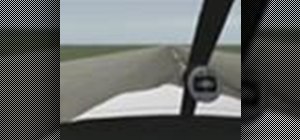
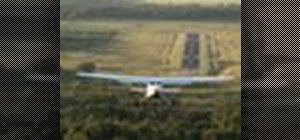
Land the plane. The controller you are talking to should brief you on the landing procedures for the aircraft and direct you to a safe spot to land. They will most likely line you up with the runway at an airport, but under rare circumstances you may have to land in a field or road. If you must land and can't get to an airport, avoid places with power lines, trees, or other obstacles.
- To begin the descent, pull back the throttle (to reduce power) until you hear the pitch of the engines change - then stop. Its impossible to generalize, but this probably shouldnt be more than 1/4 inch or so of throttle travel. Keep the airspeed within the green arc. Gently push on the yoke until the nose drops below the horizon.
- If you find you are constantly pushing or pulling on the yoke to keep the airplane steady, you have to use trim to relieve those pressures. Otherwise, it can get very tiring and/or distracting. The trim wheel is typically a wheel approximately 3-6 inches in diameter that rotates in the same direction as the landing gear wheels. It is often located near your knees on either side. It is black and has small bumps on the outside edges. As you hold pressure against the yoke, gently turn the trim wheel. If the pressure you are holding gets greater, turn the wheel in the other direction until you no longer have to maintain the original level of pressure. Note: On some small airplanes, the trim wheel may be found on the headliner and in the shape of a crank.
- Get the landing gear down, if it's retractable. If the gear is fixed, it's always down and you don't need to do anything. The gear handle (the end of the handle is shaped like a tire) is usually just to the right of the center console, above where the knee of the co-pilot would be. If you need to land on water, though, leave the landing gear up.
- You'll be using a variety of drag devices (slats and flaps, next to the throttles) to slow the plane down without losing lift.
- Just before you touch down, you'll need to raise the nose to flare and land on the main wheels first.
- If flying a large commercial aircraft, activate your reverse thrust, if the plane has it. On Boeing aircraft, there are bars behind the throttle quadrant. Pull the bars back all the way and the thrust will be directed forward to aid in stopping the aircraft.
Reduce power to idle by pulling the throttle all the way towards you. It is a black lever usually located between the pilot and co-pilot. - Gently apply the brakes by pressing on top of the rudder pedals. Use enough pressure to stop the plane without skidding. The rudder pedals themselves are used to steer the plane on the ground, so don't use them unless the plane is veering off the runway.
Step 7
Congratulations, you have just landed an airplane! Once you get some help for the unconscious pilot, you can finally faint. Go ahead, you earned it. And if you can ever stand to see another airplane, let alone get on one, you just may have "the right stuff" and should consider taking flight lessons from a certified instructor. Then again, maybe not.