
Land a Helicopter After Your Pilot Has Been Killed

This article was provided by wikiHow, a wiki building the world's largest, highest quality how-to manual. Please edit this article and find author credits at the original wikiHow article on how to land a helicopter after your pilot has been killed. Content on wikiHow can be shared under a Creative Commons License.

Grade C Views 36,217
Last edited 2 months ago

Lets say you are taking that once-in-a-lifetime helicopter tour of the Grand Canyon, when suddenly a Red Flocked Booby smashes through the windshield, incapacitating your pilot.

If you, the non-pilot, find yourself in the unenviable position of being in a helicopter without a pilot, you're going to have to land. With some mental preparation and a whole lot of luck you may be able pull this off.

Step 1 Get the pilot off the controls


  • He will likely be slumped-over pushing the stick forward. This will cause the helicopter to go nose forward into the ground.
  • A person sitting behind the pilot will be of great value here. They can reach forward and hold the pilot back.
  • Pull him back against his seat and lock his seat belt. Many aircraft have handles on the reels of the lap belt, by your hips. Flip this handle and the seat belt will lock him in place. Alternately, you can try yanking the shoulder harness forward to trick it into locking up (like when you slam the brakes in your car).

Step 2 Familiarize yourself with the controls


  • Cyclic: The main control stick coming up between your legs is called the cyclic. Push forward, the nose goes down. Pull back, the nose goes up. Push left, the helicopter banks (or tilts) left. Push right, bank right. 
  • Pedals: The pedals on the floor control the tail rotor. Push the left pedal to turn the nose left, push right to turn the nose right. You use these to keep the noise pointed forward. If you want to turn the helicopter, use the cyclic; adjust the pedals only as necessary to keep the nose from being cocked off to one side or the other.
  • Collective: The stick coming out of the floor by your left thigh is the collective. It makes the rotor blades blow more or less air. When you pull up on the collective all the rotor blades rotate slightly so that each blade takes a bigger bite and more airflow is induced through the rotor system.
  • Throttle: The throttle that controls engine speed is usually found as a motorcycle-like twist-grip on the collective, or as an overhead lever between the two pilots. In almost all helicopters the throttle is automatic. Before takeoff you set it to 100% and leave it there the whole time. So don't mess with the throttle.
  • Radio and intercom: On the cyclic there is likely a trigger (think Top Gun, "too close for missiles, switching to guns."). Different helicopters work different ways. Sometimes you pull the trigger half-way to use the intercom, and all the way to talk on the radio. Other times you push up for intercom, and squeeze the trigger for radio broadcast. There is also, usually, a floor switch that looks like the old-fashioned high-beam floor switch in a car. This will also work either the intercom or radio. If you have time and the aircraft is under control, play around with these and see if you can talk to someone.

Step 3 Get the aircraft flying straight and level


  • This is critical to your safety. Once you are straight and level you can formulate a plan, relax a little, and get a feel for the helicopter.
  • Make small control inputs! If the nose is pointing down, pull back on the stick a tiny bit, and see what happens. If it's not enough, just pull a little more and see what happens. Slow and steady wins the race.
  • Don't let the nose stay above the horizon (flying in a nose high attitude). This will cause your airspeed to decrease and you will eventually come to a stop. This is called hovering, and if you haven't done it before, you will surely crash and die.
  • If you need to stop a descent, or start a climb, keep the nose level by using the cyclic and pull up slightly on the collective. The nose of the helicopter should remain slightly below the horizon during everything you do.

Step 4 Turn towards safety


  • Once you have the helicopter under some semblance of control, you need to think about landing. Your best bet is a large airport. You are going to land like an airplane, so you need a big piece of concrete. Big airports have all the emergency equipment and the biggest pieces of concrete.
  • A small airport would be your second best bet, followed by straight wide road without wires, and an open field is your last choice.
  • If you have managed to get someone on the radio, hopefully they have put you in contact with a radar controller. This guy will tell you where to go.
  • If you aren't talking to anyone, the easiest way to find one is with the GPS. Hopefully your helicopter has a moving map display. This works much like the one in your car. There should be a little airplane on the digital map- that's you. There should also be a few little airport symbols with their three-letter identifier next to the symbol (eg: LAX, that would be a good one).
  • Start a slow turn and watch the map spin around the miniature airplane. Once the nose of your digital plane is pointing at the symbol for an airport, fly straight and level and you will eventually fly over the airport or run out of gas trying.

Step 5 The Approach


  • Now it's time to get serious. Hopefully, by now you have figured out how to control the helicopter a little bit. Remember, you are going to land like an airplane, with forward airspeed. If you try to hover and land to a spot, you will crash and die. (That is for experienced pilots only!) 
  • The key to a good approach is to set yourself up so you're lined up with the runway a good ways out (this way you are not doing any last-minute turns), and with a slow descent, so you are not diving down onto the runway.
  • Take a moment to ensure everyone has their seat belt securely fastened, and that any carry-on items are stowed securely.
  • Once you are lined up with the runway, push down on the collective slightly to start a slow descent. Imagine a piece of string running from the end of the runway to your helicopter. Fly down that piece of string. Remember to fly in a slightly nose-down attitude, this will keep your airspeed under control during the approach.
  • When you are getting closer to touchdown you may find that you have misjudged your approach and are going to land before or after the runway, or off to the side. You need to decide whether you want to go around and try to line up again. If you feel reasonably confident in your ability to fly straight and level, this would be the recommendation. The last 100 feet is not the time to fix a bad approach.
  • If, however, you have been wrestling a greased pig all the way down, you may wish to choose a small crash on the airport instead of a big one in the neighborhood adjacent the airport.

Landing

  1. In the last few seconds before touchdown you are going to feel the urge to pull way up on the collective, and way back on the stick. Don't. You may want to pull up the collective a little to cushion the landing, but as long as you are not screaming toward the earth don't worry about a hard landing. Helicopters are pretty tough, and it's not yours anyway, so don't worry about roughing it up.
  2. Use the pedals to keep the nose of the helicopter pointed down the runway. Small corrections are all that's needed. If you start veering off to the side, resist the urge to slam in full opposite pedal. This will make it worse.
  3. After you touch down-Keep Flying The Helicopter! As you are skidding down the runway, keep using those pedals to point the nose, and keep using the cyclic to keep the rotor disc flat (which you were doing when keeping the nose slightly below the horizon).
  4. Once you touch down, slowly move the collective all the way down till it stops. This collective movement will cause the nose to turn one way or the other. Use the pedals to keep the nose lined up with the runway. After you lower the collective fully the helicopter will come to a stop rather quickly. Congrats! You're alive!

After Landing

  1. Don't get out of the helicopter with the blades spinning! Using the throttle, turn the engine off. If the throttle is on the collective hand grip, roll the throttle all the way to idle. If it is a lever on the ceiling up by the middle of the windshield, pull it backwards to idle. There is almost always a safety catch to prevent you from accidentally turning the engine all the way off. You will probably have to push a button to roll the throttle off, or pull down on the lever to pull it all the way off. Once you figure it out you will immediately hear the engine spool down. 
  2. After the engine shuts down, sit there holding all the controls level until everything stops moving. You and your passengers can then egress the helicopter. Don't move the wounded/dead pilot until paramedics arrive.
  3. If your helicopter is on fire after landing you may want to exit the helicopter before everything stops moving, and pull the disabled pilot out. Just be very careful around the rotor blades. Without you holding the controls steady it can very easily flap around low enough to cut your torso in half.

Tips

  • Aircraft control is your primary concern. Don't start screwing with the radios and such until you have the helicopter under control.
  • If you have passengers, use them. They can search for airports, try talking on the radio, and assist the disabled pilot (which brings me to the next tip...).
  • Try to wake the pilot up. This should be the primary concern of any other passengers, but even if it is just you, try something (assuming you have the aircraft under control). Shout in the intercom, slap him, try something. If you can get him to wake up, he can land the thing.
  • Most of this info also applies to landing a fixed wing plane after your pilot has been killed.

Warnings

  • Too numerous to list, but here are a couple
  • Keep your airspeed up. Allowing the aircraft to slow to a hover will result in you wildly over-controlling the aircraft for about 8 seconds before you flip over and burn it in.
  • Assuming you pull this landing off, don't get out until everything stops spinning.

Via wikihow

Comments

+2
Tolipa (1) 9/26/09 6:35 AM
To think that an untrained passenger could even control a helicopter let alone land one is laughable in the extreme. The unfamiliarity with gyroscopic precession alone will immediately create pilot induced oscillations that will tear the machine apart in less than a minute. Fixed wing aircraft in flight are inherently stable; helicopters are the opposite. It is like balancing a pool cue on the tip of your finger - one wrong move and it's all over. Better to compose yourself to die with dignity.
+1
DaveyG 9/26/09 12:16 PM
Man, I would love to have my pilot knocked out mid-flight. I have read this fantastic article extremely carefully and I reckon I have totally got it licked.

Tell me how hovering is so hard? What's the techinque there?
+2
helibushpilot (2) 9/26/09 5:36 PM
even with the aboved technique you would probably die. How are you going to get the pilot out of his seat? ok maybe there are dual controls, if the pilot slumped onto the controls you would hit the ground so fast you wouldnt be able to react. ok maybe he just passes out and doesnt slump and you have duals, there is no mention about torque in aformentioned article. When you drop the pole colective you need to adjust pedal and cyclic input. if you do manage to do a run on landing and drop the pole too quick the machine is gonna nose over and the blades will probably chop the tailboom off or come right through the cockpit if you dont put the collective down you are probably going to start to rotae and flip over. Oh yeah I hope there isnt a lot of fuel on board cuz its gonna most likly catch on fire when its on its side as well. But hell go for it
+2
PhillyLawyer (1) 9/26/09 5:00 PM
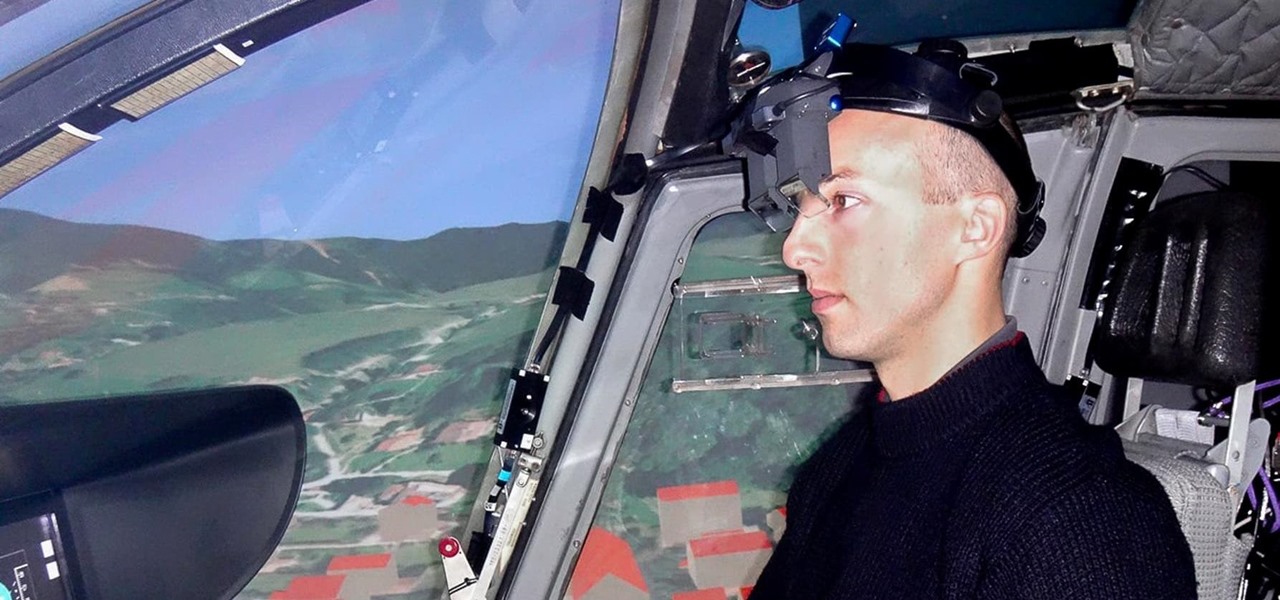
I spent an hour in a Navy helicopter sim with my pilot son and can tell you that Tolipa's comment is not true. I had never flown a helicopter in a simulator or otherwise and it is not that hard to take off, simply fly straight, and ascend and descend, as one would think. It wasn't pretty or precise in any fashion, but doable. On every attempt to land, however, I crashed the thing. I was trying to land correctly, of course, and the over rotation caused me to spin out of control right above the runway or carrier. I just couldn't get it. The instructions above make a lot of sense. I probably could have approached the runway slowly and landed with some forward speed. It definitely would have hit hard, but perhaps such a landing could be survived.
+1
datniggin (1) 9/27/09 7:55 AM
i would like to hear more comments from experienced pilots
+2
helibushpilot (2) 9/28/09 1:44 PM
i am a heli pilot
+1
dkgolfnut 9/30/09 7:21 AM
This is sa little more complex to what I heard. I thought it was something like "put your head between your knees and kiss your ass goodbye" if the trained pilot slumps over.....Pretty wishful thinking that an untrained passanger can handle a helecopter and safely land it.
+1
heliclint 9/30/09 12:11 PM
I am a Helicopter pilot in training and have also flown sims enough to this point to be fairly certain i could at least get the helicopter to the ground and make somewhat of a run-on landing that would be walkable. However, to someone who has never touched the controls of a helicopter and is along for a tour ride for the first time... Good luck! You will not be able to do it. There are simply too many things going on at once with too many controls to balance and coordinate that for the first time it will seem impossible! That being said. If i was in that situation and didn't know anything, i'm still going to try and not just sit there and let myself die without doing anything. Just keep in mind, your probably not going to walk away, you may live (SLIGHT CHANCE) but will not walk away unharmed. Just my $0.02
+1
MucMuc 10/7/09 6:23 AM
Who ever wrote this blog is a moron. Don't even think you can get past step one. Most helicopters fly below 1000 feet. You would crash before you noticed the pilot was not flying, let alone regain control before hitting the ground. Without autopilot engaged an untrained person would over react on the sensitive controls and crash even from level flight.
+1
chris12321 10/8/09 4:54 PM
"Try to wake the pilot up."
"Most of this info also applies to landing ... after your pilot has been killed."
Oh, they said _most_... :) still funny...
+1
ghopper 10/25/09 12:44 PM
Let's face it. If the pilot dies, you die! Game over dude!
+1
ghopper 10/25/09 12:45 PM
This may work in the movies, however......:)
Add your comment:

Holiday HowTo: DIY Felt Ball Wreath

Fed up with your boring ol' traditional holiday wreath? Ditch the greenery and go extra festive this year with this felt ball wreath HowTo, courtesy of Norwegian craft blog Pickles. P.S. You'll need ...

Art Borne From the Barrel of a Gun

Incredible high speed photography, capturing bullets piercing objects (via Flickr user Alex Andrea Broderick). Previously, Speeding Bullet at 1,000,000 FPS.

Beautiful Animated Boxes Conducted by Drummer

You don't want to miss this animation. The overall concept -particularly the color, movement and sound- is beautiful. The piece is entitled "Box Animation, performed by Mike Edel, and created by ...

Real Life Plastic Green Army Man

Whether you're into cosplay or not, this life sized army "figurine" is awesome. The photo realistic plastic toy soldier was a contestant in a cosplay competition at Italy's Lucca Comics ...

I Want a Robo-Chef in My Kitchen

This year's FOOMA International Food Machinery and Technology Exhibition had a few robots I wouldn't mind hanging around my kitchen. The sushi-bot's hand is amazing... if only it could make the sushi ...

loading...