

Pitch a Hammock Without Trees

This article was provided by wikiHow, a wiki building the world's largest, highest quality how-to manual. Please edit this article and find author credits at the original wikiHow article on how to pitch a hammock without trees. Content on wikiHow can be shared under a Creative Commons License.

Grade C Views 446
Last edited 2 months ago

A hammock, especially an ultralight like the sub-2-pound Hennessy Backpacker A-sym, makes life very sweet for backpackers. But in the desert, or on a beach, while you still get the "tent" benefits, you no longer enjoy the comfort of hanging suspended in the air, above the cold, hard ground. In addition, you have snakes, spiders, and scorpions to contend with, and you get the worst of the dust. For another twenty or thirty dollars, and a few more pounds weight, you can hang your hammock just about anywhere using this approach, and you don't need to worry about critters, nor bring your sleeping bag and pad.

Step 1  

Have a hardware store cut you two pieces of 1/16 inch aircraft cable, each at least twenty feet long. Buy at least six (6) 1/16 inch cable clamps while you're there, along with four (4) 1/2 inch by 10 inch lag bolts and two shorter lag bolts not less than 6 inches long. Two pieces of one inch round or square aluminum tubing, at least 4 feet long, are necessary also. If you don't have an assortment of hardware at home, buy two 1/4-20x2" bolts and nylock nuts, or two 1/4x2" hitch (or clevis) pins with hitch pin clips.

Step 2  

Using the cable clamps, make a loop on each end of each cable. Three clamps for each loop are recommended for safety, but for reasons explained below, this overkill should not be necessary.


Step 3  

Drill a 1/4 inch hole through one end of each tube, about 2 inches from the end. Through each of these holes, insert a bolt with locknut, or a clevis pin with a hitch pin clip.


Step 4  

Using a ratcheting socket wrench, screw 6-inch or longer lag bolts into the ground about 8 to 12 feet apart (points C and D in the drawing). Leave only about 1/2 inch sticking out of the ground. The poles go over the heads of the bolts, and they keep the base of the poles from shifting position.


Step 5  

At point A in the drawing, screw in one of the 10-inch lag bolts. The distance, assuming 20-foot cables and 4-foot poles, would be about 9 feet from point C.

Step 6  

Removing the nuts from one of the cable clamps, make a loop at about the midpoint of the first aircraft cable, just big enough to fit over the pole. Holding the pole upright, slide the loop so that the cable between points A and C is very tight. Screw the nuts back on tight.


Step 7  

Screw in a 10-inch lag bolt at point B, securing the first pole. Have a friend hold it upright if possible while locating point B, otherwise use stones or some other means to make sure the pole is (close to) perfectly upright when the anchoring cable is tight.

Step 8  

Repeat the previous 3 steps for points D, E, and F, using the second piece of aircraft cable.

Step 9  

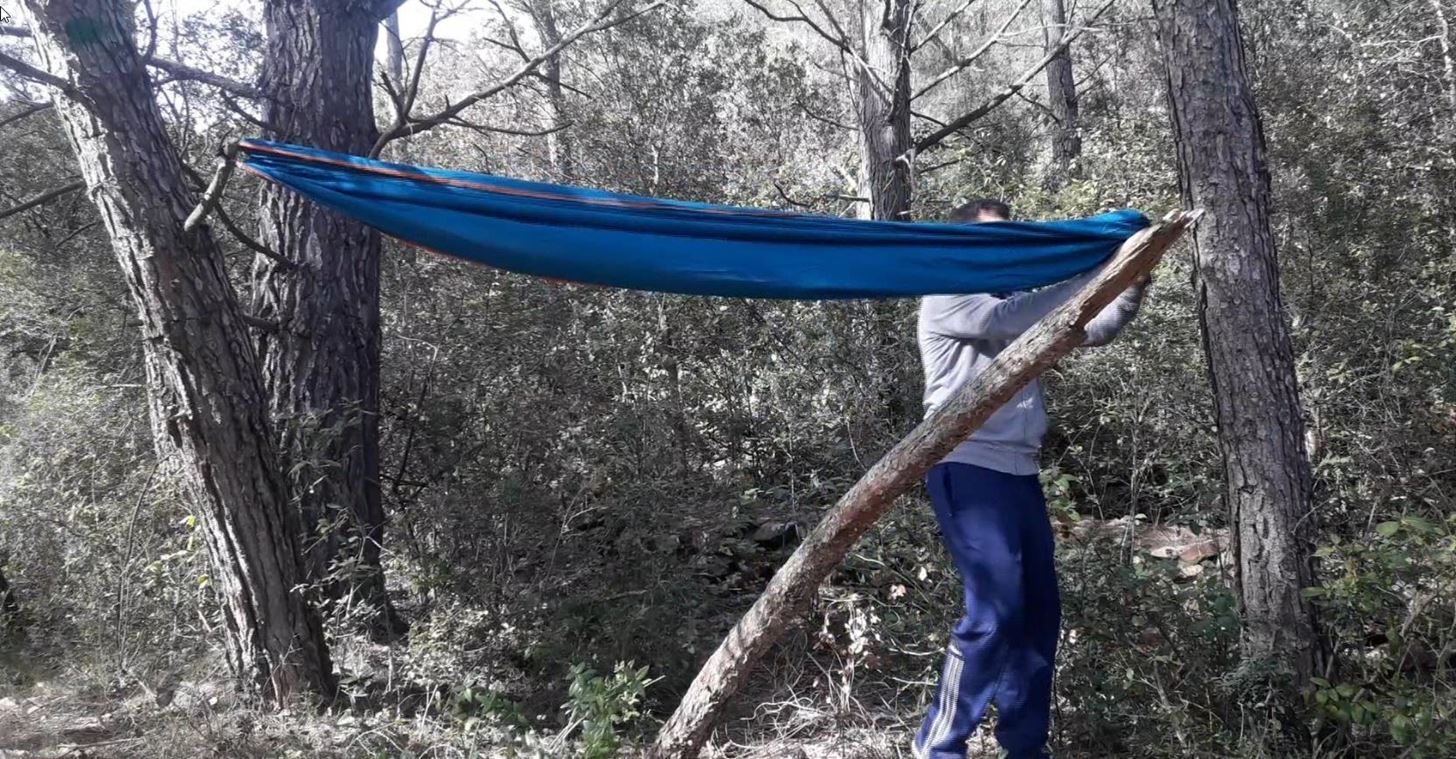
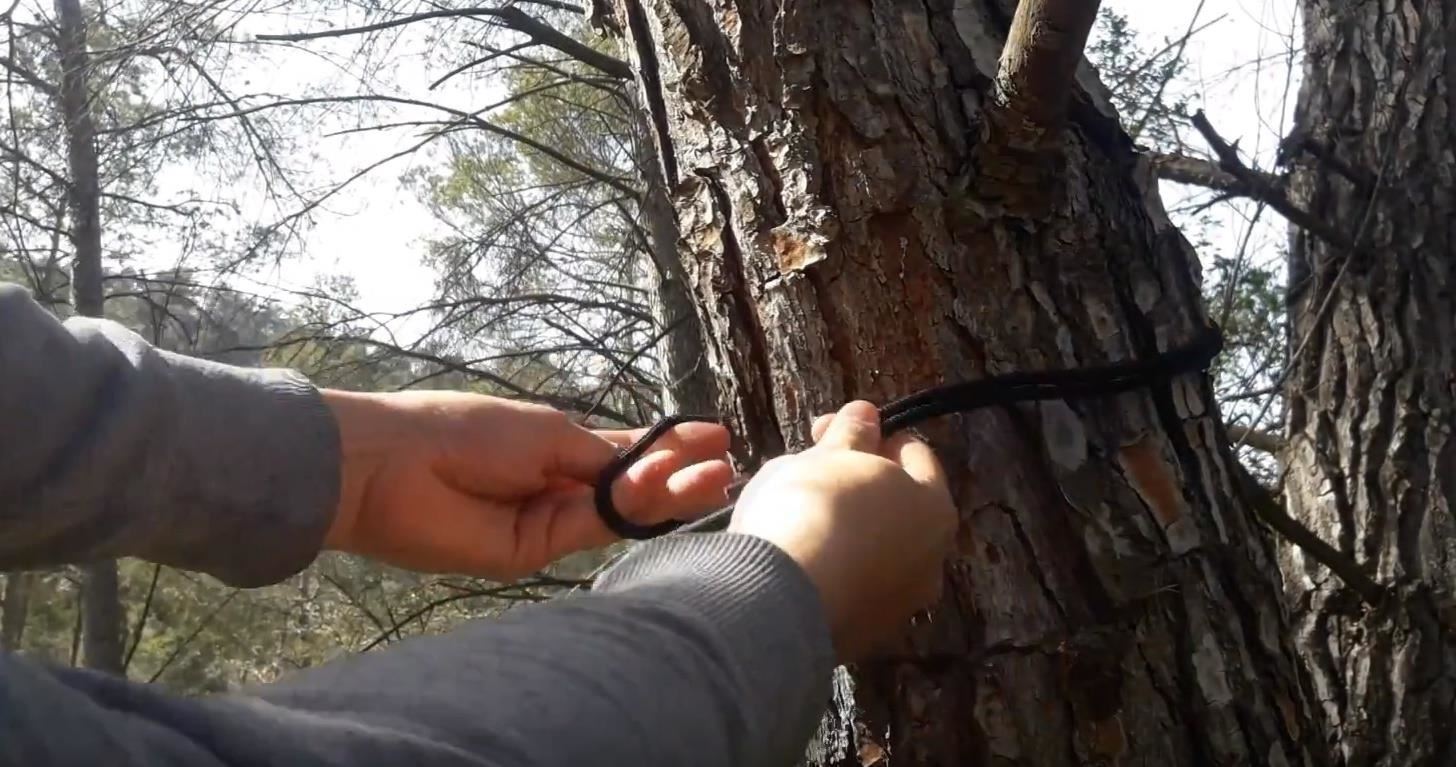
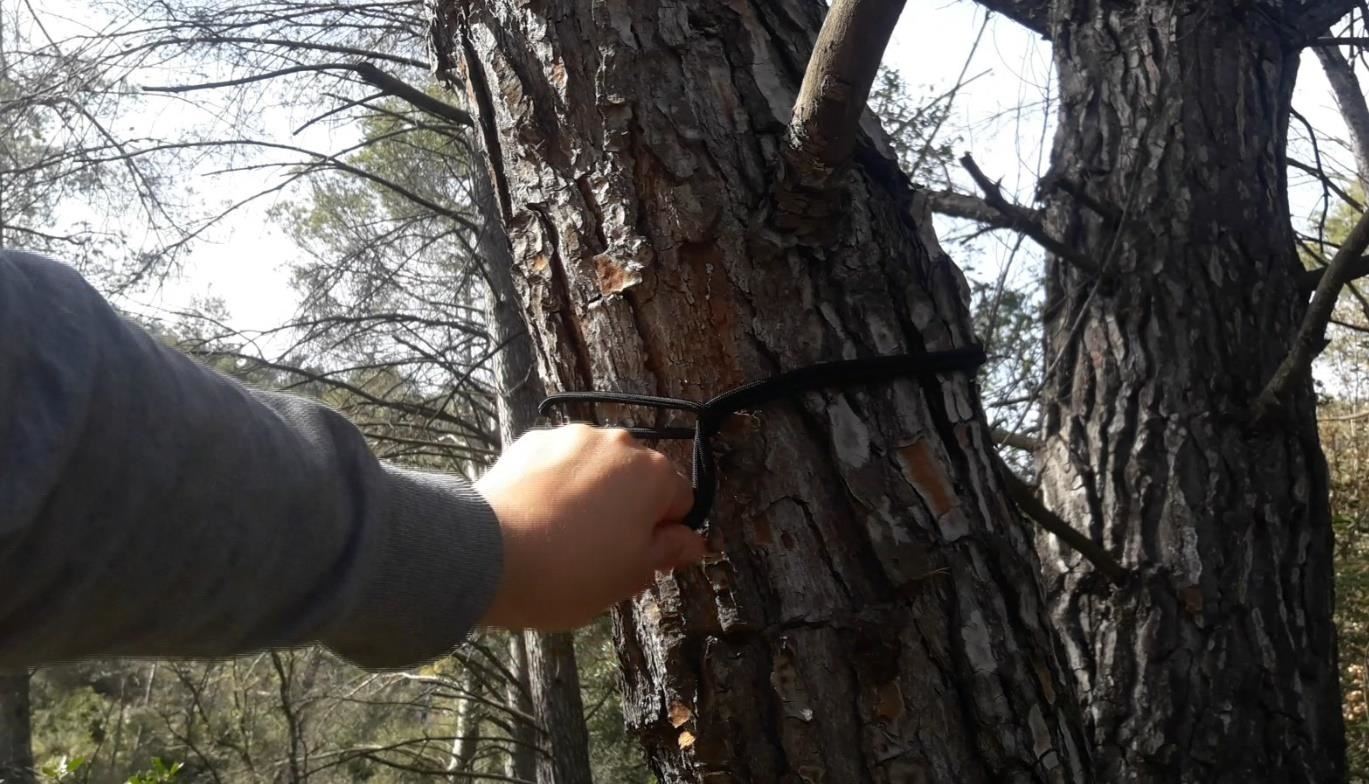
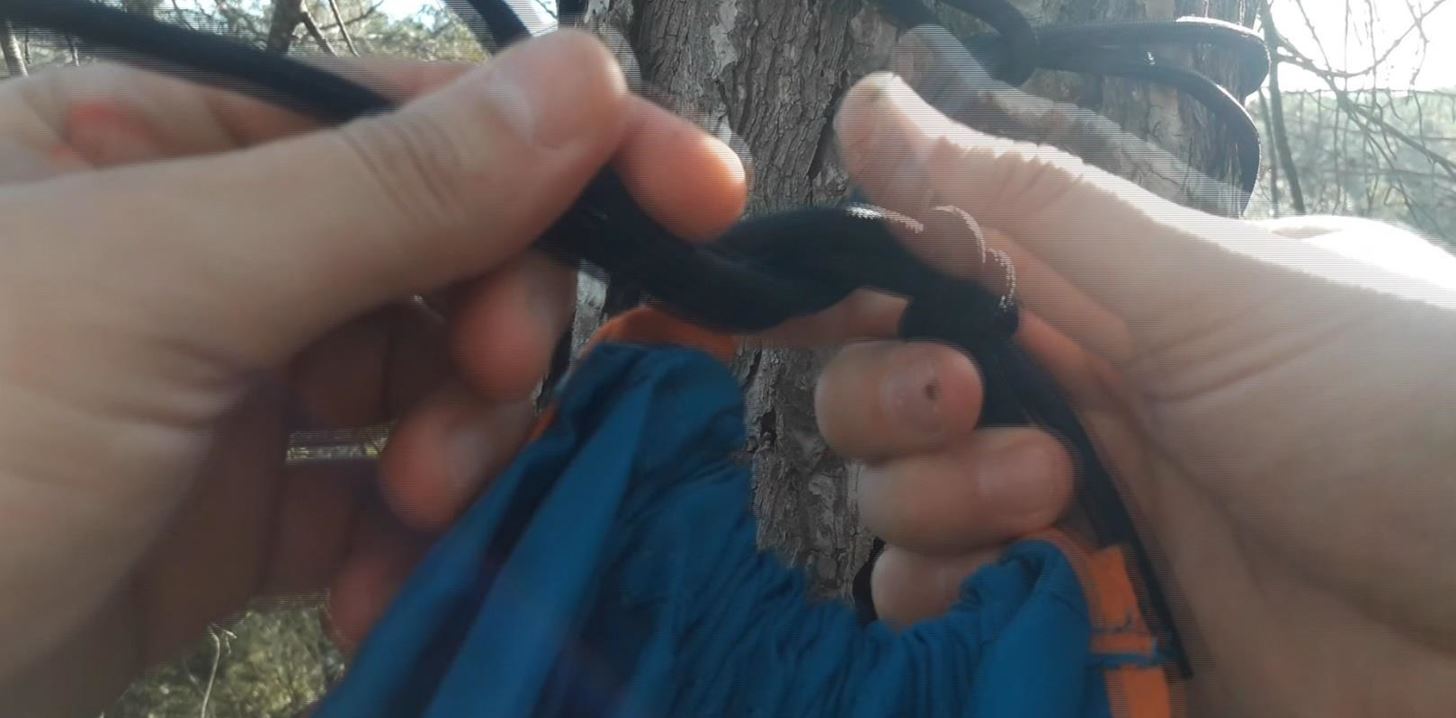
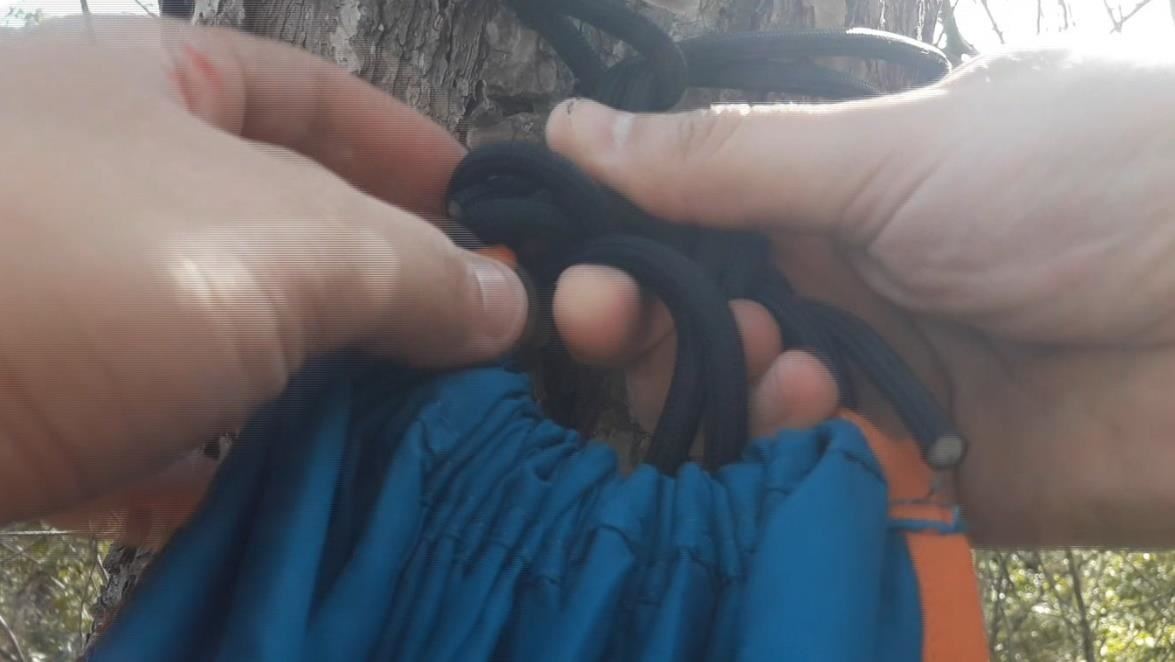
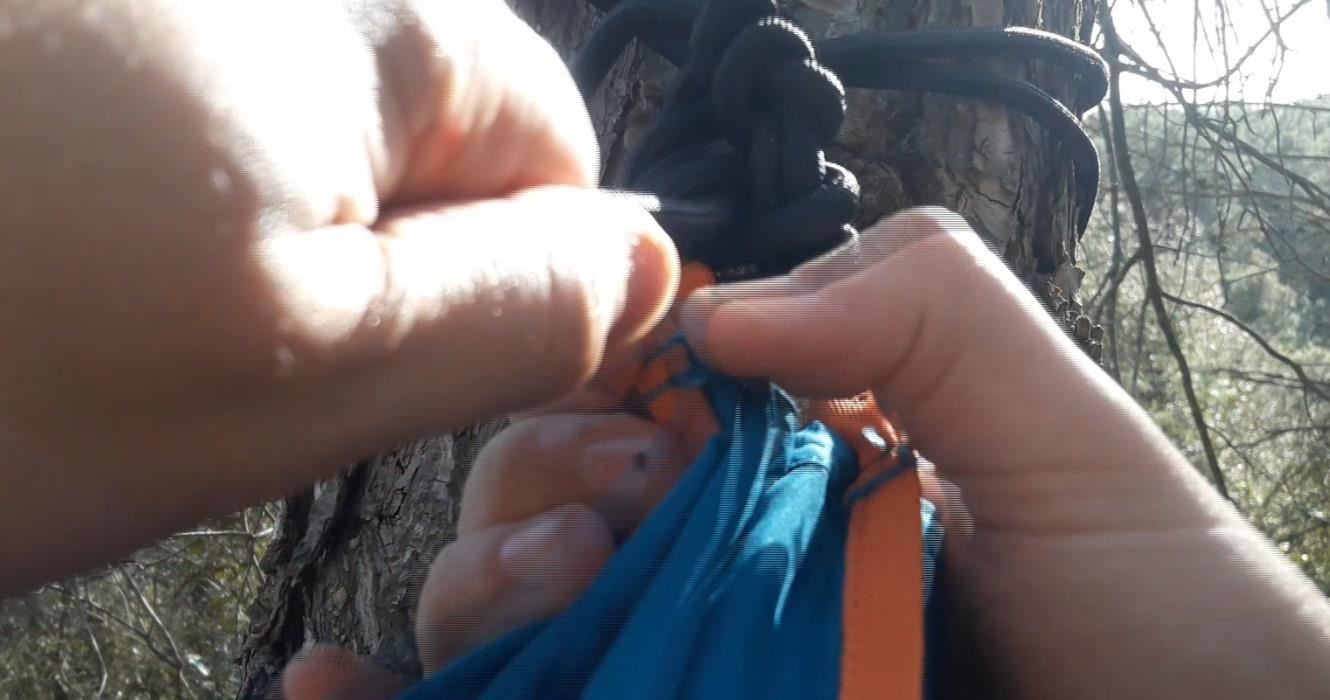
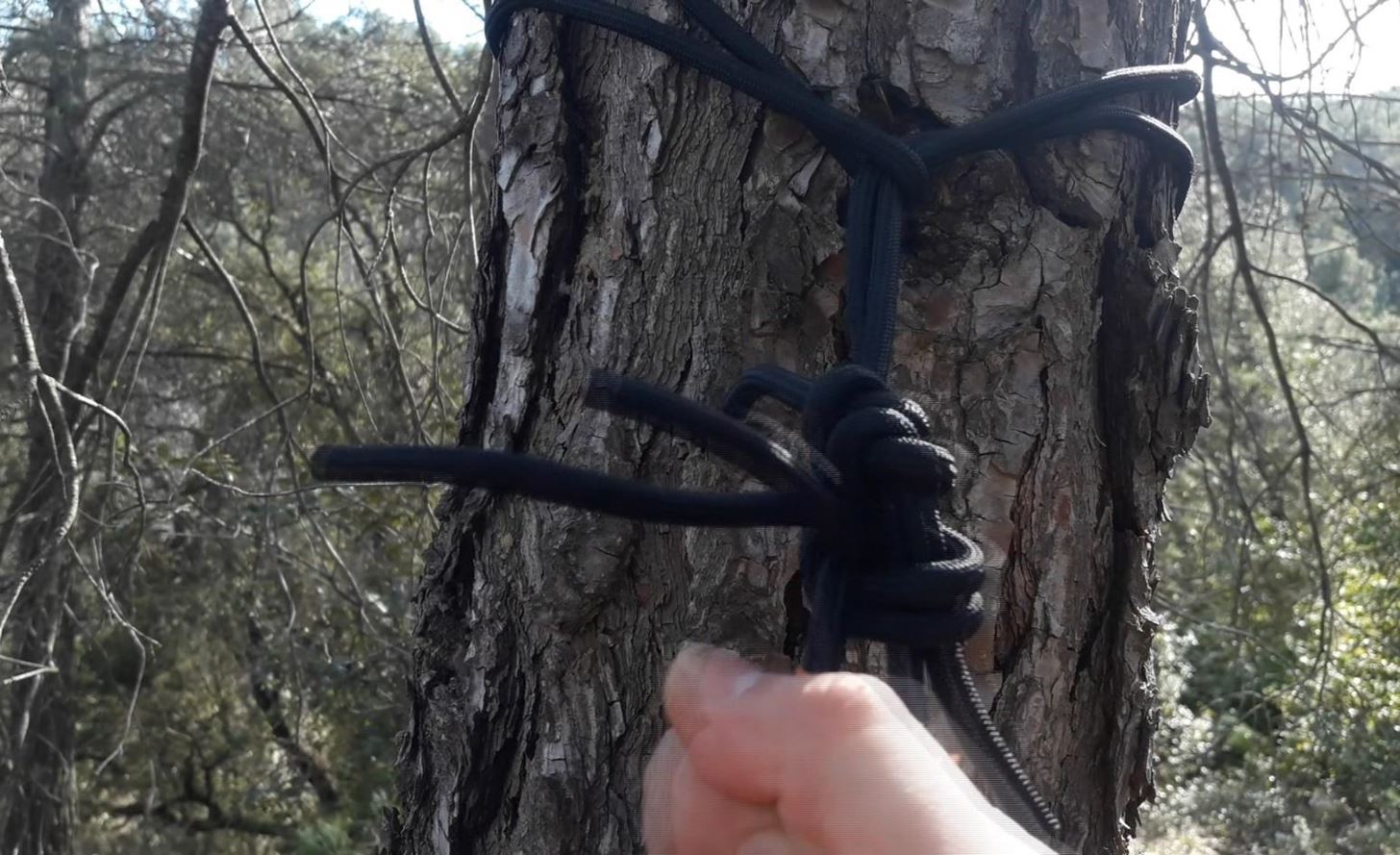
Mount your hammock, using two half hitches at point C, and a taut-line hitch at point D. Slide the hitch until the hammock rope is very tight.


Step 10  

Sit in the middle of the hammock, and make sure your bottom doesn't hit the ground. If it does, adjust the taut-line hitch at point D. Practically speaking, there will be some stretch in the rope and fabric which will necessitate performing this step 3 or more times until everything is tight. If there is no more "take-up" room on the side with the taut-line hitch, loosen it; undo the two half-hitches at point C; and re-tie them closer to the hammock. Then you will have more room for adjustments. Ideally you will be only an inch or two above the ground when the setup is complete, meaning only a slight impact if something breaks or a lag bolt pops out of the ground.


Step 11  

With the working end of the taut-line hitch, tie another two (or more) half hitches around the cable, in case the wind lifts the hammock off the poles while you're not in it. Otherwise you'll be chasing it across the desert, then finally extracting it from a cactus or mesquite bush.


Step 12  

Enjoy sleeping in your hammock as long as you stay in this location.

Step 13  

There is no need to remove the cable clamps when you break camp. The bolts or clevis pins may also be left in the poles; so the only thing necessary to do is remove the lag bolts and pack everything up.

Tips

  • The lag bolts may not work in loose sand. Research different types of tent pegs to find some that work in your target area.
  • Two more 6 inch lag bolts will enable attaching side adjustment cords, and rain fly, if necessary.
  • Ignoring Hennessy's recommendation to install the hammock at "chair height" allows you to use the shortest possible lag bolts and only one clamp per loop, since the impact will be minimal if the setup collapses from only an inch above the ground.

Warnings

  • Some hard-core ultralight backpackers will want to try using their telescoping hiking poles, which they're carrying anyway, to eliminate the long aluminum poles. They will most likely break, as seen here after one such attempt. A better alternative would be to make the aluminum poles double as your hiking poles, or as part of your backpack frame. 

Things You'll Need

  • During initial setup at home
    Drill with 1/4" titanium or cobalt drill bitSmall adjustable wrench, or socket to fit aircraft cable clamp nuts
  • During setup and at campsite
    Two (2) 1"x48" pieces of round aluminum tubingFour (4) 1/2"x10" lag boltsTwo (2) 1/2"x6" lag boltsSocket wrench to fit lag boltsTwo (2) 1/16"x20' pieces of aircraft cableSix (6) 1/16" aircraft cable clampsTwo (2) 1/4"x2" bolts with locknuts, or clevis pins with hitch pin clipsHammock

Via wikihow

Tattoo Yourself (or Your Girlfriend)

Henna. Beautiful, fun, exotic... and best of all... Do-It-Yourself (with a little practice). Also, unlike tattoos, it's temporary. Henna generally lasts for 1-3 weeks. An ancient tradition, henna is ...

The Mother of all Ping Pong Guns - LETHAL

The lethal pneumatic ping pong gun. This thing isn't exactly wife approved. Creator Ron Kessinger built this mighty powerful ping pong launcher - "a variation on a potato cannon, built to run on ...

Old Bumper Cars Go Street Legal

Flickr user MR38 has posted a set of photos of bumper cars made street legal, as displayed at the annual Cruisin’ Grand festival in Escondido, California. This mini cars were retrofitted with 750 cc ...

Human Powered Ferris Wheel

According to Google's (albeit rough) translation from French to English: "A big wheel in India that does not work with an engine but using human power. Men throw themselves in front of the wheel ...

Make-It-Yourself LEGO Gummies

Turkey day is over, and you have this nice Friday-Saturday-Sunday stretch before it's back the daily grind. Here's a project that inspires both young and old: LeGummies brick shaped gummy candies ...

loading...