


Watching facial expressions in order to determine whether a person is lying might just save you from being a victim of fraud, or it could help you figure out when somebody's being genuine. Jury analysts do this when assisting in jury selection. The police do this during an interrogation. You have to learn the little facial and body expressions that can help you distinguish a lie from the truth.
Step 1
Learn to recognize deflections. Usually when people are lying, they will tell stories that are true but are deliberately aimed at not answering the question you asked. If a person responds to the question "Did you ever hit your wife?" with an answer such as "I love my wife, why would I do that?", the suspect is technically telling a truth, but they are avoiding answering your original question, which usually means they're lying.
Step 2
Notice the behavior of other body parts. Watch their hands, arms and legs, which tend to be limited, stiff, and self-directed when the person is lying. Their hands may touch their face, ear, or the back of the neck. These are, however, a sign of nervousness, not a sign of deceit. They might not necessarily be nervous because they're lying.
Step 3
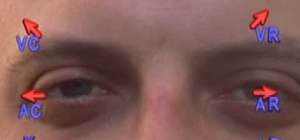
Look out for microexpressions. Microexpressions are facial expressions that flash on a person's face for a fraction of a second and reveal the person's true emotion underneath their facade. Some people may be naturally sensitive to them, but almost anybody can easily train to be able to detect microexpressions. Typically, in a person who is lying, their microexpression will exhibit the emotion of distress, characterized by the eyebrows being drawn upwards towards the middle of the forehead (sometimes causing short lines to appear across the forehead skin).
Step 4
Check for sweating. People tend to sweat more when they lie. (However, some people may sweat a lot more during nervousness/shyness.)
Step 5
Mind exaggerated details. See if they are telling you too much, like "My mom is living in France, isn't it nice there? Don't you like the Eiffel tower? It's so clean there." Too many details may tip you off to their desperation to get you to believe them.
Step 6
Notice the person's eye movements. Contrary to popular belief, a liar does not always avoid eye contact. Humans naturally break eye contact and look at non-moving objects to help them focus and remember. Liars may deliberately make eye contact to seem more sincere. You can usually tell if a person is remembering something or making something up based on their eye's movements. When someone is remembering details, their eyes move to the right (your right). When someone is making something up, their eyes move to the left. It's usually reversed for lefties.
Step 7
Be aware of their emotional responses
- Timing and duration tends to be off when someone is lying. If you ask someone a question and they respond directly after the question, they're lying. They're already thinking about the answer just to get it over with and move forward. Everyone thinks that if they delay the answer they're lying but they're really not.And, as with smiling, facial expressions of a poor liar will be limited to the mouth area.
- Pay close attention to the person's reaction to your questions. A liar will often feel uncomfortable and turn their head or body away, or even subconsciously put an object between the two of you. Also, while an innocent person would go on the offensive (usually responding with anger, which will usually be revealed in a microexpression directly after you say you don't believe them), a guilty person will often go immediately on the defensive (usually by saying something to reassure their facts, such as deflections).
Step 8
Listen for a subtle delay in responses to questions. An honest answer comes quickly from memory. Lies require a quick mental review of what they have told others to avoid inconsistency and to make up new details as needed. However, when people look up to remember things, it does not necessarily mean that they are lying.
Step 9
Be conscious of their usage of words. Verbal expression can give many clues as to whether a person is lying, such as:
- Using/repeating your own exact words when answering a question
- Not using contractions
- Avoiding direct statements or answers (deflections)
- Speaking excessively in an effort to convince
- Speaking in a monotonous tone
- Leaving out pronouns (he, she, it, etc.)
- Speaking in muddled sentences
- Using humor and sarcasm to avoid the subject
- Using Deflections (beating around the bush, not answering the question.)
Step 10
Allow silence to enter the conversation.
- If they're lying, they will become uncomfortable if you stare at them for a while with a look of disbelief. If they're telling the truth, they will usually become angry or just frustrated (lips pressed together, brows down, upper eyelid tensed and pulled down to glare).
Step 11
Change the subject quickly. While an innocent person would be confused by the sudden shift in the conversation and may try to return to the previous subject, a liar will be relieved and welcome the change. You may see the person become more relaxed and less defensive.
Step 12
Watch his or her throat. A person may constantly be either trying to lubricate their throat when he/she lies by swallowing or clearing their throat to relieve the tension built up. A person's voice can also be a good lie indicator; they may suddenly start talking faster or slower than normal, or their tension may result in a higher-pitched speaking tone.
Step 13
Watch his/her skin tone Sometimes, when a person is lying, they blush or become pale or green. But they might be embarrassed by the question, so pay attention to the answer. If they say, "It's personal." Raise your eyebrows and pretend to change the subject. Then, if they look relieved, they are telling the truth. If they are still tense, they are afraid you might return to the subject.